Student Loan Consolidation Cost: The Three Charges Priced in Dollars (2026)
Federal consolidation has no fee, yet it can cost thousands: a rate round-up, capitalized interest and a longer term, each priced in dollars from official examples.
Interest rates decide what a student loan really costs, and they work very differently for federal and private debt. Federal Direct Loans carry fixed rates set each year by law for new loans: for loans first disbursed in the 2026-27 award year, Federal Student Aid lists 6.52 percent for undergraduates, 8.07 percent for graduate unsubsidized loans and 9.07 percent for PLUS loans. Private loans and refinance loans are priced by each lender on the borrower’s credit.
Articles under this tag look at rates from both sides. On the federal side, we show how a Direct Consolidation Loan sets its rate, by taking the weighted average of the loans being combined and rounding it up to the nearest one-eighth of one percent, and what that rounding costs in dollars. On the private side, we compare the rates refinance applicants are offered at different credit-score bands and where the largest jumps occur.
A rate is never the whole story, which is why these articles also cover term length, capitalized interest and the federal protections a lower private rate can cost you. Every rate quoted links to the page that publishes it, with the date we read it, so you can confirm the current figure before you act.
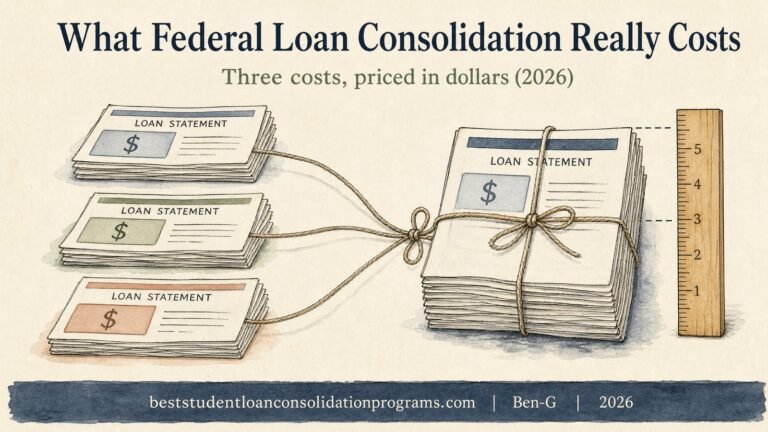
Federal consolidation has no fee, yet it can cost thousands: a rate round-up, capitalized interest and a longer term, each priced in dollars from official examples.
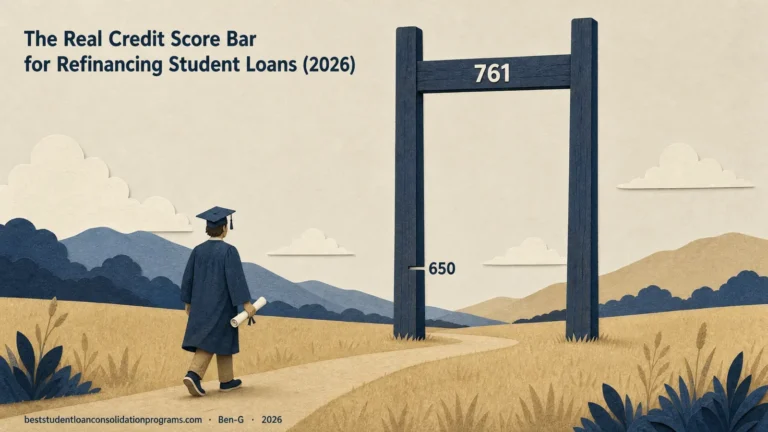
What credit score to refinance student loans do lenders want? Minimums run 650-720, but SoFi’s approved borrowers average 761. Rates by score band, sourced.