Student Loan Rehabilitation vs Consolidation: The Re-Default Numbers Nobody Shows You (2026)
Student loan rehabilitation vs consolidation, compared with data: 45% vs under 10% re-default by plan, a 96% drop in consolidation exits, the 2026 RAP rule.
Collections is the tag for the enforcement side of federal student loan default: Treasury offset of tax refunds and federal benefits, administrative wage garnishment of up to 15% of disposable pay, collection fees, and the private collection agencies that act for the Department. Involuntary collections resumed in May 2025 after a five-year pause, were paused again in January 2026, and the Department told reporters in late October 2026 that they remained paused while private collectors were expected to begin outreach as soon as November. Collection fees on a defaulted loan that is consolidated are capped at 18.5% of outstanding principal and interest, and fees are not charged on payments made under a rehabilitation agreement that is completed. The Treasury and the Department launched a Defaulted Loans Support Center in September 2026 and reported a 69% rise in rehabilitation approvals and a 95% rise in consolidations out of default afterward, figures our pages label as agency claims. Articles under this tag cite 34 CFR Part 685, Department and Treasury press releases, Congressional Research Service reports and state attorney general advisories, and explain how each exit from default stops collections and when. If you are facing offset or garnishment, the pages here explain which exit stops which collection action, how quickly, and what a collector may and may not demand under the fee cap, so you can act before the next tax refund or paycheck is taken rather than after.
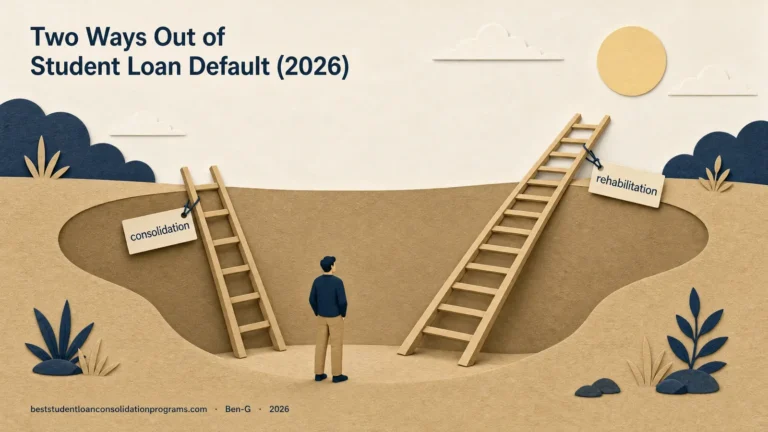
Student loan rehabilitation vs consolidation, compared with data: 45% vs under 10% re-default by plan, a 96% drop in consolidation exits, the 2026 RAP rule.