Student Loan Rehabilitation vs Consolidation: The Re-Default Numbers Nobody Shows You (2026)
Student loan rehabilitation vs consolidation, compared with data: 45% vs under 10% re-default by plan, a 96% drop in consolidation exits, the 2026 RAP rule.
FFEL loans are federal student loans made under the Federal Family Education Loan Program, in which private lenders issued loans that the federal government guaranteed. The program closed to new lending in 2010: under the Health Care and Education Reconciliation Act, no new FFEL loans were made after June 30, 2010, and every federal student loan since then has been a Direct Loan. Millions of borrowers still repay FFEL loans today, some held by commercial lenders and some by the Department of Education.
The articles under this tag explain what that older status costs and what changes when an FFEL loan is consolidated. On its own, an FFEL loan does not qualify for Public Service Loan Forgiveness and cannot be repaid under the Repayment Assistance Plan. Consolidating it into a Direct Consolidation Loan opens both, but Federal Student Aid credits only payments made on Direct Loans toward PSLF, and a consolidation first disbursed on or after July 1, 2026 is limited to RAP or the Tiered Standard plan. We also cover defaulted FFEL loans, where consolidation can add collection costs of up to 18.5 percent.
Every figure links to Federal Student Aid, the Code of Federal Regulations or another original source, so you can check the rule before you decide.
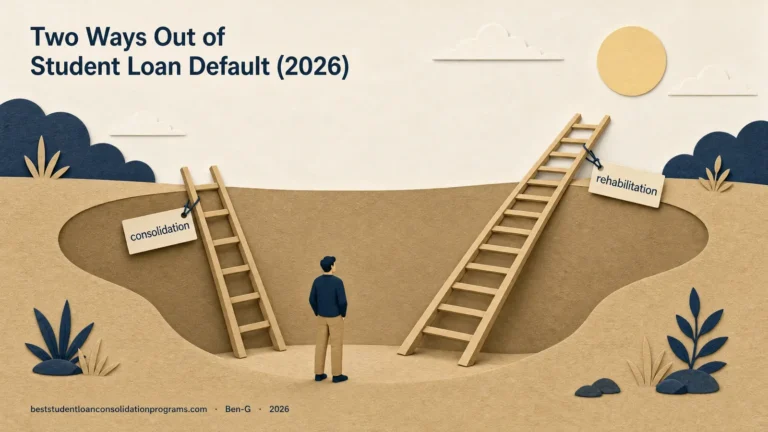
Student loan rehabilitation vs consolidation, compared with data: 45% vs under 10% re-default by plan, a 96% drop in consolidation exits, the 2026 RAP rule.
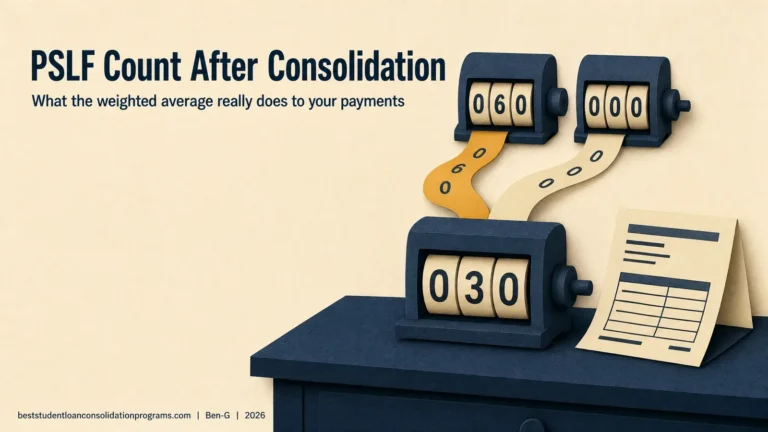
Your PSLF payment count after consolidation is a balance-weighted average. Six worked loan mixes, the July 2026 RAP cutover and what Buyback can’t reach.