Student Loan Rehabilitation vs Consolidation: The Re-Default Numbers Nobody Shows You (2026)
Student loan rehabilitation vs consolidation, compared with data: 45% vs under 10% re-default by plan, a 96% drop in consolidation exits, the 2026 RAP rule.
Loan rehabilitation is one of two ways out of federal student loan default and the only one that removes the default notation from your credit report. Under 34 CFR 685.211 the borrower agrees to nine voluntary, reasonable and affordable monthly payments within a ten-month window; the payment is usually set at 15% of discretionary income and can be as low as $5. Once the ninth payment posts, the loan returns to good standing, the default is deleted from the credit history, and the borrower regains eligibility for income-driven plans and federal aid. Rehabilitation can be used only once per loan. The CFPB’s analysis of servicer data found that 45% of rehabilitated borrowers who were not in an income-driven plan were back in default within three years, compared with fewer than 10% of those who enrolled in one, which is why the plan you choose after rehabilitation matters more than rehabilitation itself. Rehabilitation approvals rose 69% after the Treasury and Department launched the Defaulted Loans Support Center in September 2026. Articles under this tag compare rehabilitation with consolidation on time, credit-report effect, fees and re-default risk, with every figure linked to its regulatory or research source. Rehabilitation takes longer than consolidation and requires nine payments you can sustain, but it is the only route that clears the default from the credit report and it leaves the one-time consolidation option available for later; the pages here show when that trade is worth the extra months and when it is not.
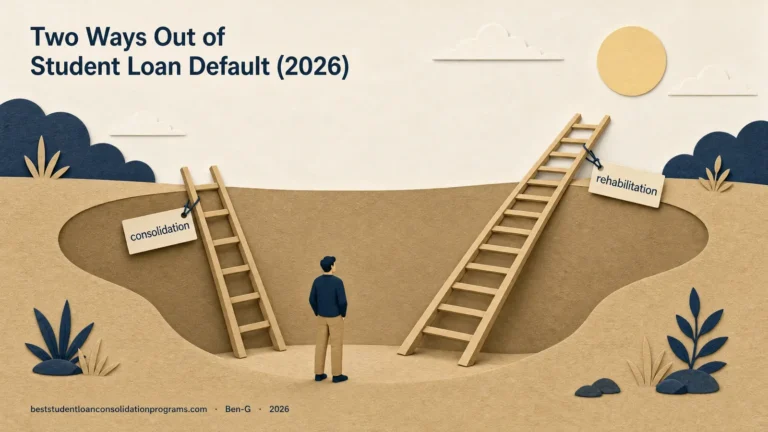
Student loan rehabilitation vs consolidation, compared with data: 45% vs under 10% re-default by plan, a 96% drop in consolidation exits, the 2026 RAP rule.